Loading...

V-Ray 2.0 for Maya (Educational)

Price (USD): $149.00

14900 points
298 points

We only ship to these countries.

You must read the grey box below with red text.

V-Ray for Maya (Educational) is only available to students or staff members of an academic institution and can not be used for commercial projects. You must download and email or fax us the Chaos Group Educational Agreement before we can process your order.   You must be able to provide proof of your educational status (Valid Student ID, Current Class Schedule, Staff ID etc.) Please emal us at shop@cgarchitect.com or fax +1 403 206 7308. We can not process your order until we receive this information.

Pricing above includes USB license dongle ($35 Value)

CONTACT US FOR PRICING ON EDUCATIONAL BUNDLES OVER 21 SEATS


V-Ray 2.0 for Maya


V-Ray 2.0 for Maya now with interactive rendering on CPU and GPU!

Users can expect many new features and updates with this new version, which now runs on both GPU and CPU. A full feature list for V-Ray for Maya 2.0 is described below.

* V-Ray RT and V-Ray RT GPU - the new interactive technology running both on CPU and GPU speeds up the shading and lighting stages of your production. With the new V-Ray 2.0 you can take full advantage of our state of the art interactive renderer. It can also be used for fast off-line rendering with support for motion blur on both CPU and GPU, and displacement, subdivision surfaces, hair and fur on the CPU.

* Python callback for access to and modification of the translated V-Ray scene before rendering – This power feature allows you to: directly modify the V-Ray scene before rendering to fit V-Ray seamlessly into your production pipeline; access the full features of the V-Ray rendering engine and its plugins, even if they are not exposed in the user interface; add your own custom V-Ray plugins without the need to code Maya plugins; and much more.

* Support for the Substance textures in Maya 2011.5 and Maya 2012 - Use the new V-Ray 2.0 with the Substance textures in Maya 2011.5 and Maya 2012 to create a wide range of procedural shaders for your projects.

* Faster rendering of dynamic geometry (displacement, fur, proxies, hair etc) - new internal optimizations have led to even faster rendering of dynamic geometry like displacement, proxies, fur and hair, etc.

* Faster rendering of render-time subdivision surfaces, VRayFur and Maya hair  - the new improved core of V-Ray 2.0 can render VRayFur, Maya hair and render-time subdivision surfaces much faster.

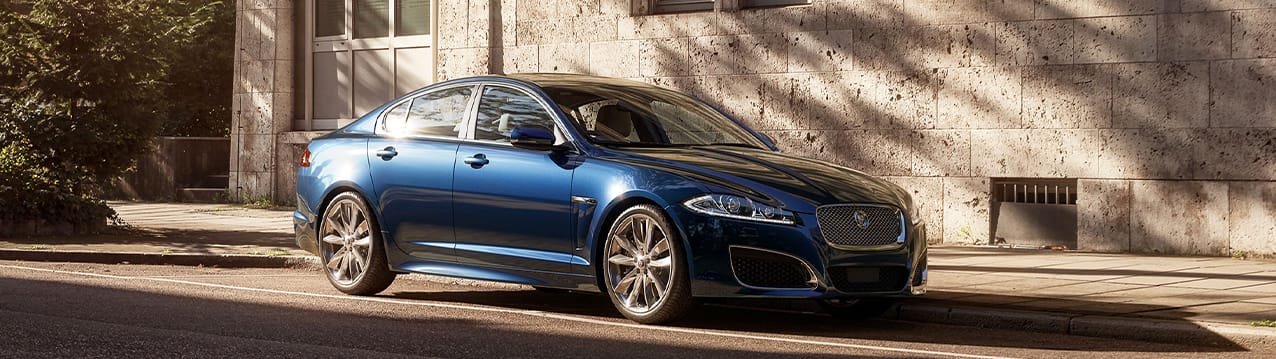
* VRayCarPaint material  - create realistic car paint shaders complete with "Base",  "Flakes", and "Coat" layers. Full mapping support allows for amazing flexibility and a wide range of effects.

* VRayToon shader - add an amazing cartoon-like feeling to your renderings.

* Support for dispersion in refractions for VRayMtl  - this option uses the new capabilities for wavelength-dependent raytracing of the V-Ray core, allowing you to create stunning close-ups of refractive objects with eye-dazzling caustics.

* Automatic support for both Mari- and Mudbox-style tiled textures - automatically load the correct texture bitmaps depending on the UV tiles of the rendered object.

* PTex textures - stop worrying about UV coordinates and use PTex textures instead. This revolutionary technology allows the artist to be absolutely free in his or her creative process and skip the tedious UV unwrapping.

* Lens distortion through Nuke displacement maps - the VRayPhysicalCamera can use displacement maps from Nuke to completely mach the distortion of your real cameras.

* Option to turn off camera motion blur - separate control allows you to enable or disable the motion blur coming from the movement of the camera.

* Support for rendering of Maya fluids - recognize and render Maya fluids directly, with full support for GI and light scattering inside the volume.

* Support for the Maya stereo camera in batch render mode  - render your stereoscopic animations with V-Ray 2.0 and Maya batch render mode.

* The ply2vrmesh tool can convert RealFlow .bin files to .vrmesh files - with the new version of the ply2mesh tool V-Ray 2.0 users can render very large RealFlow simulations as VRayProxy objects with significantly improved memory efficiency.

* Extended irradiance map viewer tool – allows the incremental merge of irradiance map files to avoid redundant information; preview of light cache files; manual deletion of unwanted samples, and usage of OpenGL display lists for more interactivity.

* Img2tiledexr tool for mass conversion of many common image formats to tiled OpenEXR files

* Output of multi-channel scanline OpenEXR files with data-window  - removes the need to manually convert the multichannel OpenEXR files produced by V-Ray to scanline-based OpenEXR files for efficient processing by compositing applications.

* Shutter efficiency for motion blur – render more realistic motion blur with manual control over the camera shutter efficiency.

and many other fixes and improvements...